
Quick Overview
Medical billing and coding professionals ensure healthcare providers are paid correctly and patient records are coded accurately. Success in this field depends on mastering both technical and soft skills to maintain accuracy, efficiency, and compliance within healthcare systems.
This guide covers:
✅ The 10 essential skills needed for medical billing and coding success in 2025
✅ Why anatomy, physiology, and coding systems like ICD-10 and CPT are vital
✅ Key technical, analytical, and communication abilities for everyday tasks
✅ The importance of ethics, adaptability, and ongoing learning
✅ How professional certifications boost credibility and earning potential
Health care also requires personnel besides doctors and nurses. The health care system also depends on people like medical billers and coders. These people make sure patients are billed accurately and that health care providers are compensated accurately.
If you’re thinking about starting or advancing your career in this field, you might be wondering: what are the key skills needed for medical billing and coding success?
Whether you’re just entering the profession or looking to level up, mastering the following ten skills will help you stand out in 2025’s competitive job market.
Is Anatomy and Physiology Needed for Medical Coding?
You need to know what you are coding to do it accurately. Medical billing and coding professionals analyse clinicians’ treatment notes, lab results, and procedure records. These documents are filled with medical jargon.
That’s why you need to know anatomy and physiology to do medical coding. You do not need to be a medical professional, but having a basic understanding of anatomy will aid you in assigning the correct codes to the appropriate diagnoses and procedures.
Consider short online medical terminology and anatomy courses specifically designed for coders. These will help you gain confidence in the early stages of your career.
Mastering ICD-10 and CPT Codes
The coding field revolves around choosing appropriate classification systems. Every diagnosis and every procedure is matched with unique codes for systems like ICD-10 (International Classification of Diseases) and CPT (Current Procedural Terminology).
Being skilled at these systems is crucial for obtaining certification in medical coding. Billing accuracy helps avoid claim rejections and ensures compliance with regulations in the healthcare sector.
Practical advice: Keep your knowledge fresh — ICD and CPT codes change often and for good reason: medical procedures and technologies advance rapidly.
Solid Computer and Technical Skills
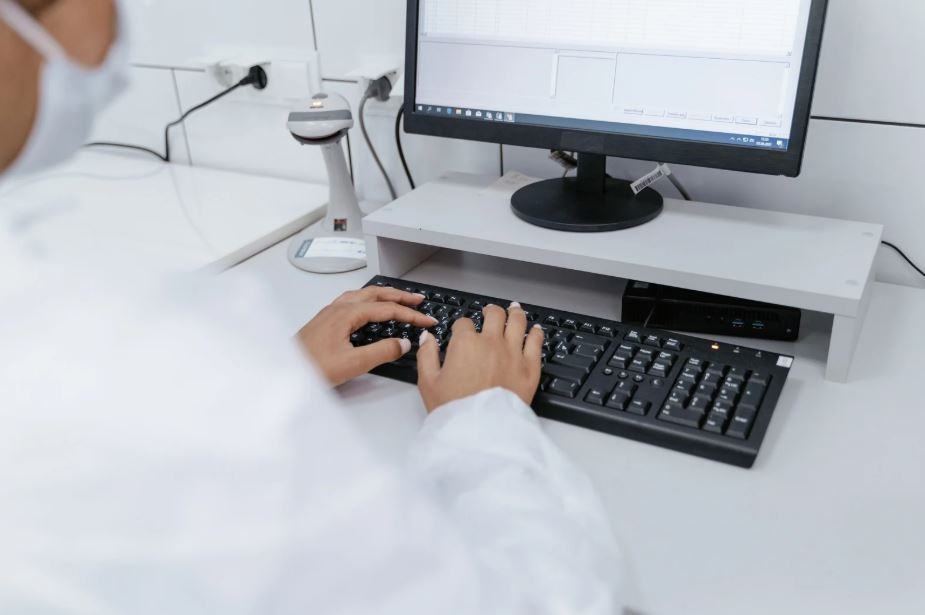
All medical billing and coding is done through computers. Each professional has an EHR (Electronic Health Record), billing software, and claims submission systems that they have to work with.
This means developing medical billing ICD-10 and CPT code mastery is essential. You will be expected to work with systems like Epic, Cerner, Medisoft, or Kareo and be able to solve minor computer issues that may arise during remote work or in the office.
Key Technical Skills:
- Precision in data entry
- Proficiency in electronic health record (EHR) and billing systems
- Spreadsheet (Excel & Google Sheets) data management
- Knowledge of secure data transfer and storage (especially under GDPR compliance).
Attention to Detail and Accuracy
Attention to detail in coding is one of the most critical skills in the medical billing and coding sector. One incorrect digit can trigger the insurance claim denial or delay process, and that can be costly for the providers.
In this field, a lack of detail or composure can also lead to a breach of professional integrity. You will be expected to manage lists of payable codes, payment documentation, and personally identifiable information (PII) data vaults. Accuracy is not a tolerable flaw.
Analytical and Problem-Solving Skills
Every record or claim that you process will tell a story, and not all the stories will be straightforward. There may be a mismatch of codes and diagnoses, and a claim may be voided for ambiguous reasons.
Analytical thinking will play a pivotal role here, and coders and billers should be able to identify the issue, trace the cause, and close it.
Updated Example: If a patient’s treatment is recorded under an outdated ICD-10 code, you will need to change it to the correct one before resubmitting. The foundation of a good coder or biller is a combination of logic, persistence, and analysis.

Communication and Interpersonal Skills
Much of the work might be solitary, but communication remains an important skill — especially for medical billers. You will need to work with doctors, patients, and insurance companies to clarify or resolve conflicts.
These soft skills for medical billers and coders include professionalism, patience, and the ability to explain complex information simply.
Even remote coders must be able to communicate clearly in writing for emails, claim notes, and report summaries.
Time Management and Organisation
With medical billing and coding jobs, you will likely work under tight deadlines and deal with large amounts of information. If you work for a large hospital or insurance company, you might process hundreds of records in a week.
Staying organised and keeping track of submissions, follow-ups, and corrections will greatly improve your productivity and help to keep your stress levels down.
Top Tip: Try using project management tools like Trello or Asana to track claims, or make your own spreadsheet to serve as a dashboard to track your claims.
Ethical and Discrete Office Routine
Every day you’ll be exposed to sensitive patient information. Knowing how to keep such information safe is required by law and by ethical obligation as set under the Data Protection Act 2018 and GDPR.
Employers expect confidentiality and integrity regarding the discretion of all records by coders and billers. Ethical practices become more paramount in the case of disputes regarding the invoice, as you would be required to comply with and depend on the policies of the organisation.

Adaptability and Eagerness to Learn
The health sector is not stagnant; the practices of medicine change, as do the software and coding guidelines. It is the professionals who retain value who embrace such changes and commit the time to learning.
Invaluable mastery will come from the many certification classes, as well as taking short refresher courses that are available online.
Pro Tip: AAPC and UK Clinical Coders Network are great professional societies that provide you with the most recent information, their educational resources, and, sadly, lack networking.
Development and Certification Skills for Professional Growth
Despite not being a “skill” in the common sense, professional certification is imperative as it consolidates what you’ve amassed and elevates your chances of being hired.
The most important medical coding certification skills revolve around demonstrating your ability to apply codes accurately, comply with regulations, and use industry software efficiently.
Here are a few well-known certifications:
- AAPC Certified Professional Coder (CPC)
- AHIMA Certified Coding Specialist (CCS)
- AMSPAR Medical Administration Diploma (UK)
These credentials help boost your reputation—and your salary. In the UK, certified coders make £38,000 to £50,000 annually. Non-certified coders only make £25,000 to £32,000.

Bonus Tip: Keep Your Soft Skills as Sharp as Your Technical Ones
Employers appreciate it when candidates have a blend of hard and soft skills. You may wow recruiters by learning code and mastering billing software, but you may not be hired if you lack reliability, teamwork, empathy, and flexibility. Medical coding and billing involve people and great responsibility.
Final Thoughts
The healthcare sector is changing fast, but one thing will remain: proficient coders and medical billers are always needed.
Doing well in this career requires more than knowing the tools of the trade. You must have an interest in the work, concentrate, and possess a strong sense of accuracy, ethics, and responsibility. Focusing on these 10 needed skills in medical billing and coding will open the door to remote opportunities, advancement, and a more secure financial future.
So, whether you’re starting your training or trying to move your career up a notch, understand that your skills in coding and billing do more than keep a hospital open; your work ensures a patient gets the attention they need, one code at a time.